
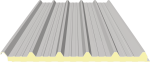
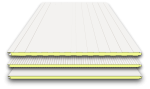
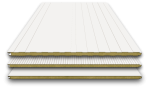



Screws for sandwich panels
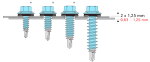
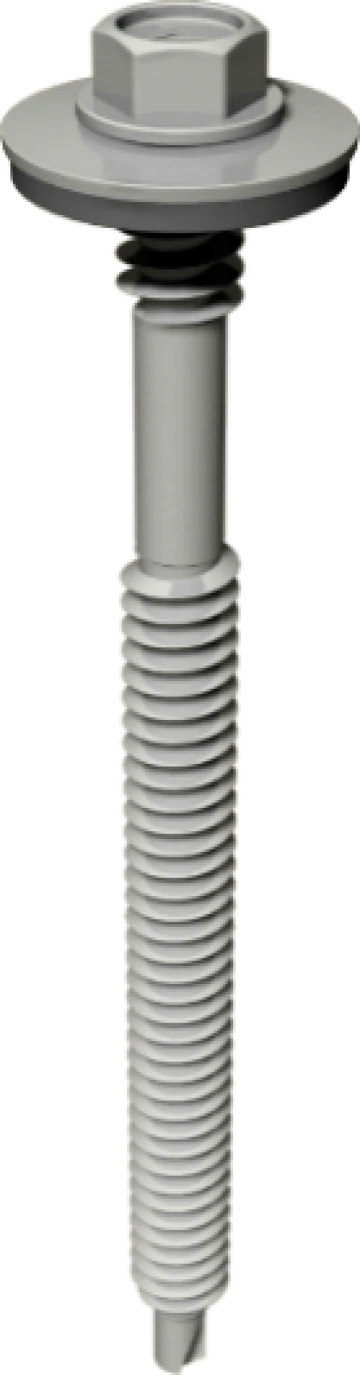
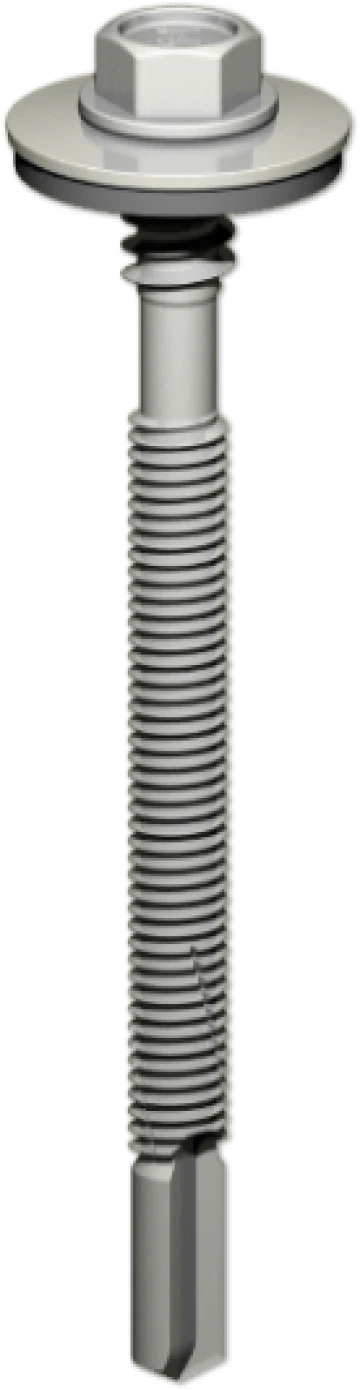
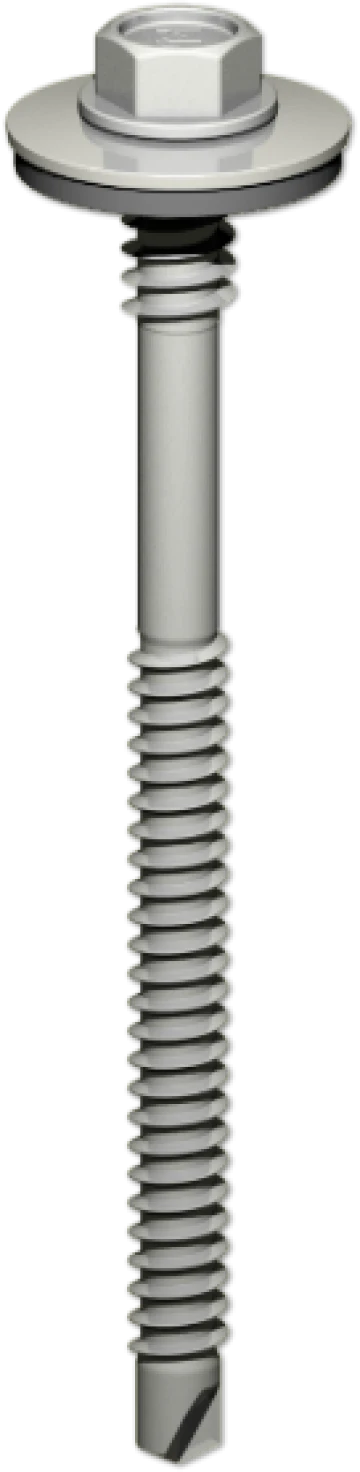
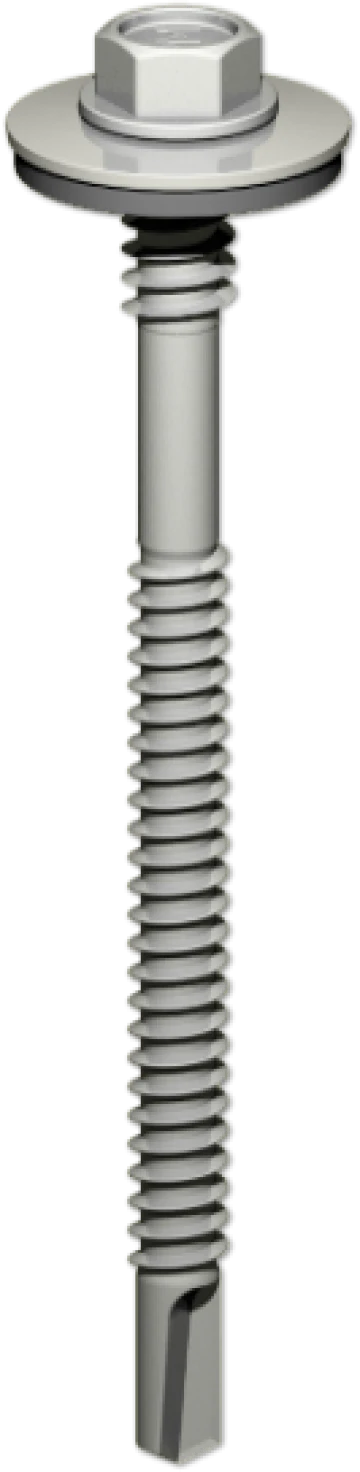
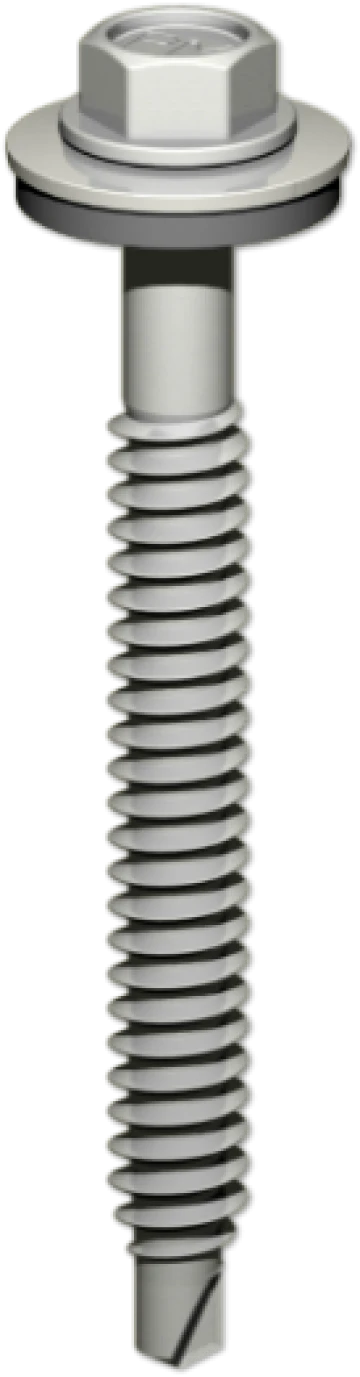
Panel self-tapping screws with safety thread for fixing sandwich panels to steel, timber and concrete substructures. For outdoor applications, use stainless steel screws; for indoor use, use carbon steel screws. All screws are self-tapping and are supplied with a sealing washer.
* plus VAT
Stainless steel screws for outdoor use
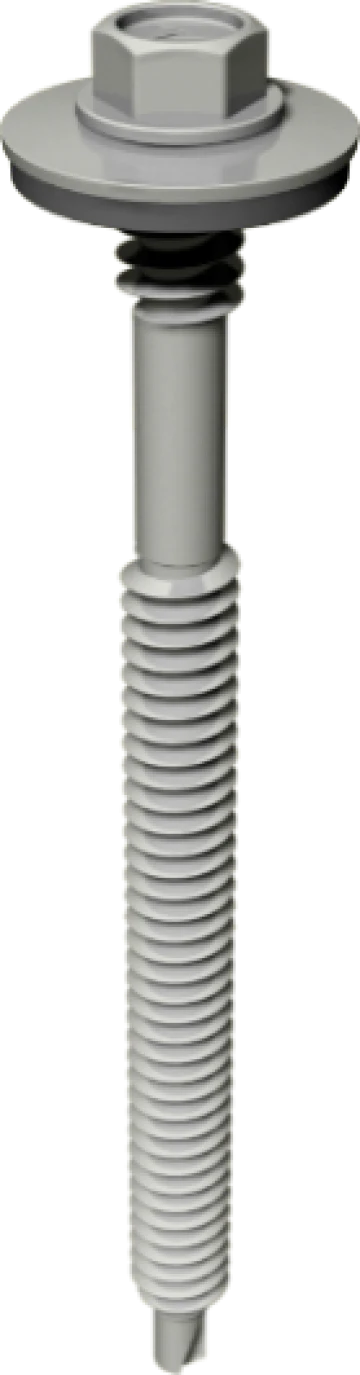
Stainless steel screws are required for the installation of sandwich panels in outdoor environments. Our bimetallic screws combine an A4 stainless steel body with a hardened carbon steel drill tip. The result: high corrosion resistance and good drilling performance in a single product.
Steel substructure
For steel substructures, select the screw according to the material thickness of your purlins or profiles:
| Screw | Drill tip | Steel substructure | Diameter | Lengths |
|---|---|---|---|---|
| 7571 | No. 2 | 1.2–3.5 mm | 5.5/6.3 mm | 70–175 mm |
| 7570 | No. 3 | 1.5–6.0 mm | 5.5/6.3 mm | 70–195 mm |
| 7575 | No. 5 | 4.0–12.5 mm | 5.5/6.3 mm | 75–195 mm |
All three types have a safety thread and are supplied with a 22 mm sealing washer. They are packed in packs of 100.
The 7570 screw with No. 3 drill point is the standard type for most applications. It covers the usual range of steel purlins and sections. For thinner sections (e.g. lightweight substructures), use the 7571; for heavy steel beams, use the 7575.
Timber substructure
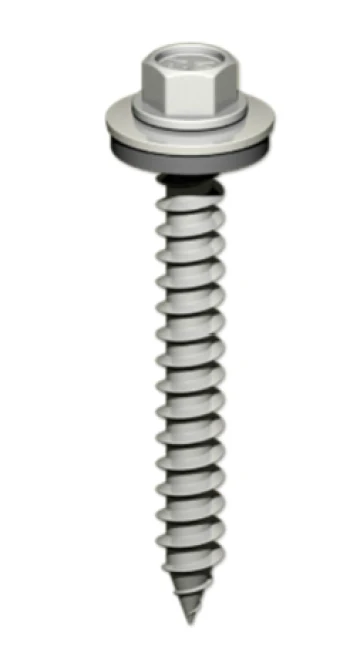
For sandwich panels on timber substructures, use the 7580 screw. It has a reduced drill point (No. 1) and is designed for anchorage depths of 50 mm or more in timber.
| Screw | Drill point | Anchorage | Diameter | Lengths |
|---|---|---|---|---|
| 7580 | No. 1 (reduced) | ≥ 50 mm | 6.3/7.0 mm | 102–260 mm |
The longer screw lengths, up to 260 mm, also allow thick panels (up to 200 mm) to be fixed to wooden rafters or purlins.
Carbon steel screws for indoor use
Carbon steel screws are cheaper than stainless steel and are suitable for indoor use. They are galvanised but are not approved for outdoor use.
Steel and aluminium substructure
| Screw | Application | Price from/100 pcs |
|---|---|---|
| 7653 | Steel/aluminium profiles on timber substructure | €22.74 |
| 7673 | Type B façade screw, profiles > 1.25 mm | €22.74 |
Concrete substructure
| Screw | Application | Price per 100 pcs |
|---|---|---|
| 7890 | Asymmetrical thread for concrete | €21.52 |
The 7890 screw is specially designed for fixing sandwich panels to concrete substructures. The asymmetrical thread ensures a secure hold in concrete.
Important: Never use carbon steel screws outdoors. Despite being galvanised, they do not offer sufficient protection against corrosion. Moisture leads to rust formation, the seal is compromised, and you risk voiding the warranty on your panels.
Choosing the correct screw length
The screw length is determined by the panel thickness plus the required anchorage depth in the substructure. The screw must pass completely through the panel and be anchored sufficiently deep into the substructure.
Rule of thumb for steel substructure: The screw must pass through at least 3 full threads of the substructure.
Rule of thumb for timber substructure: At least 50 mm of anchorage depth in the timber.
Correlation between screw length and panel thickness (example 7570)
| Screw length | Min. panel thickness | Panel thickness max. |
|---|---|---|
| 70 mm | 22 mm | 45 mm |
| 85 mm | 32 mm | 60 mm |
| 110 mm | 52 mm | 85 mm |
| 125 mm | 57 mm | 100 mm |
| 145 mm | 62 mm | 120 mm |
| 175 mm | 92 mm | 150 mm |
If in doubt, choose the next longer screw. A slightly longer screw won’t do any harm, but one that’s too short won’t hold.
Installation instructions
Screw in at right angles: The screw must be screwed in perpendicular to the panel surface. Screws screwed in at an angle will result in leaky joints.
Ensure the washer is correctly positioned: The washer must lie flat against the panel surface. It must neither protrude nor be compressed too tightly.
Use the safety thread: Our panel screws have a safety thread that produces a noticeable resistance once the correct clamping force is reached. Do not turn the screw beyond this point.
Concealed fastening (VB): For panels with concealed fastening, insert the screw through the groove in the panel edge. The screw is covered by the adjacent panel and is not visible from the outside.
Frequently asked questions about screws for sandwich panels
That depends on the wall thickness of the steel section. Measure the material thickness: for 2 mm, use the 7571 (drill bit No. 2); for 4 mm, the 7570 (No. 3); and for 6 mm or more, the 7575 (No. 5).
Stainless steel screws are designed as bimetallic components: the head and thread are made of corrosion-resistant A4 stainless steel, whilst the drill tip is made of hardened carbon steel. This combination is more complex to manufacture, but offers lasting corrosion protection for outdoor applications.
No. Even under roof overhangs or in covered areas, the humidity is high enough to cause corrosion. Carbon steel screws are approved exclusively for indoor use – for example, for partition walls or false ceilings.
As a guideline, use 2 screws per support point for wall panels and 2–3 screws per raised rib for roof panels. The exact number required depends on wind loads and the building’s geometry. Our sales team will be happy to calculate the quantity for you.