
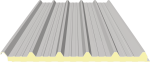
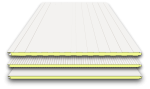
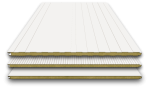
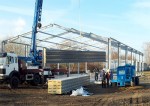
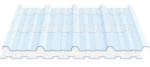
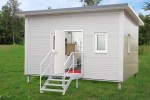

Sandwich panels anthracite (RAL 7016)
Anthracite is the most popular colour for sandwich panels. The timeless RAL 7016 colour gives roofs and façades a modern, elegant look. Here you will find all our roof and wall panels in anthracite - available directly from stock.
Why anthracite is so popular
In recent years, RAL 7016 has become the colour of choice for commercial buildings and private construction projects. The dark grey tone with a slight blue tint has a contemporary look and suits modern architecture.
Timeless elegance: anthracite is neutral enough not to be obtrusive, but striking enough to create a distinctive look. The colour will remain current for years.
Easy to clean: Dark surfaces conceal light soiling better than light colours. Dust and deposits are less noticeable.
Versatile combinations: Anthracite harmonises with wood, glass, exposed concrete and light plaster façades. The combination with white windows and doors is also a classic.
Value-enhancing: A façade in anthracite enhances the appearance of buildings - from garages to commercial buildings.
RAL 7016 in detail
RAL is a standardised colour system that ensures uniform colour tones in the industry. RAL 7016 is called "anthracite grey" and belongs to the group of grey tones.
Our sandwich panels in RAL 7016 are coated at the factory. The polyester coating (25 μm) is UV-resistant and colour-fast. The colour remains stable for many years without fading or yellowing.
The outside of our stock products is RAL 7016, while the inside is usually RAL 9002 (grey-white). This combination is practical: the desired dark look on the outside, a light colour on the inside for friendly interiors. In customised production, we also manufacture in anthracite on both sides on request.
Anthracite for roof and façade
You can design the roof and wall in a uniform anthracite colour or deliberately create contrasts.
Uniform appearance: Roof and façade in RAL 7016 create a coherent, modern appearance. This variant is particularly popular for halls, garages and commercial buildings.
Contrasting look: An anthracite-coloured roof combined with a light-coloured façade (RAL 9002 or RAL 9006) sets the roof apart as a design element. Conversely, a dark-coloured façade with a light-coloured roof also works.
Material contrasts: Anthracite harmonises perfectly with wooden elements, glass inserts and aluminium profiles. Clinker brick walls or exposed concrete plinths also go well.
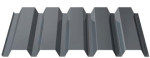
You have a choice of different surfaces for the wall panels: The micro-lining is discreetly textured, the Eurobox lining is classically striking. For a particularly quiet surface, we recommend panels with concealed fixings - no screw heads are visible here.
Further RAL colours available
In addition to anthracite, we have other colours in stock:
RAL 9002 (grey white): Light, neutral tone. Popular for interiors and light-coloured façades.
RAL 9006 (white aluminium): Silver-metallic shade. Technical, industrial look.
RAL 8012 (red-brown): Classic for roof panels. Traditional look, matching tiled roofs in the neighbourhood.
For special colours outside our stock range, please use our custom production. We can produce in almost any RAL colour - the delivery time is around 2 to 3 weeks.
Frequently asked questions about sandwich panels in anthracite
The inside of our stock items is RAL 9002 (grey-white) as standard. If you would like anthracite on both sides, we can produce this for you in customised production.
No, our polyester coating is UV-resistant. The colour remains stable for many years. In extreme sunlight, a minimal lightening may occur after 15 to 20 years, but this is hardly noticeable.
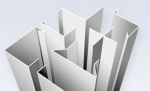
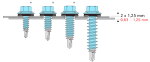
We also offer edge profiles, ridge plates and verge plates in RAL 7016. This results in a uniform overall appearance. Screws with matching coloured heads are also available.
Dark colours absorb more heat from the sun than light colours. This is generally not a problem with roof panels, as the PIR core insulates the heat well. The interior temperature does not rise noticeably as a result. The surface of wall panels facing south can become warm, but this has no effect on the insulating effect or durability.